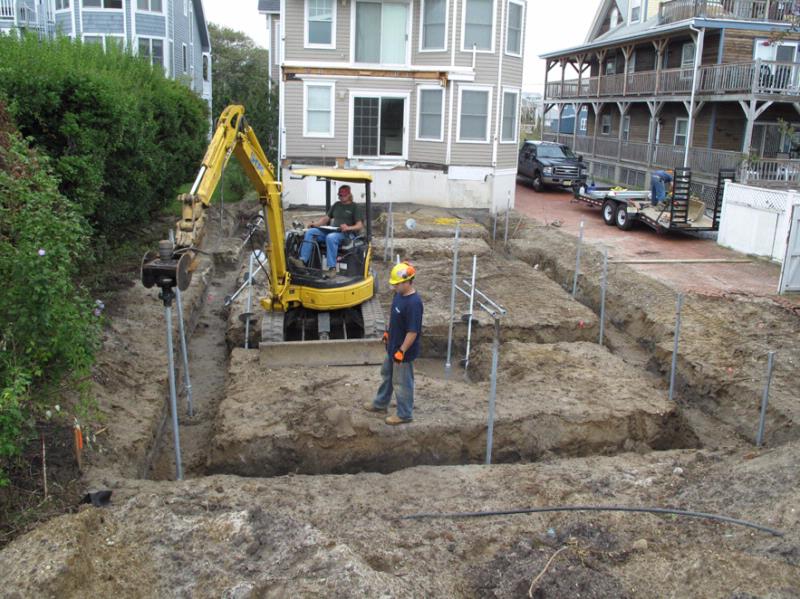
Driven foundations are a crucial component in the building of high buildings, providing the necessary support needed to ensure safety and longevity. As structures reach greater heights, the challenges associated with ground design and building become more intricate. Piling foundations efficiently relocate the load of the structure to deeper, more stable soil layers, making them crucial in areas where topsoil are weak or unstable. Understanding what piling foundations are and their importance can significantly influence the success of any construction project.
For those new to the industry of construction, traversing the world of piling foundations can appear overwhelming. However, it is important to grasp the basics, from how piling works to the various kinds available. This piece will function as a detailed guide, including everything from the science behind deep foundation engineering to the modern advancements that are transforming this critical aspect of building. By the end, readers will gain important knowledge into why piling foundations are often the best choice for projects demanding structural integrity, especially in challenging soil conditions or in the scope of marine construction.
Grasping Post Foundations
Post foundations represent unique kinds of foundations used to hold up edifices by moving forces to deeper, sturdier ground strata. Contrary to standard bases, which allocate the load of a structure across a fairly large area close to the surface, piling bases penetrate through soft ground materials to reach sturdier substrates. This establishes them vital for high structures, where steadiness and load-bearing capacity are critical concerns.
The concept of pile foundations is founded on the principle of distributing the weight of the building through straight posts, that can be constructed of materials such as steel or concrete. These piles are placed or excavated into the earth, reaching into solid rock or dense soil to secure the edifice stays well-held. This approach of base is notably advantageous in regions in situations where surface soils are loose or weak, causing traditional bases inadequate.
Comprehending the principles behind post foundations is essential to effective construction projects. Piles are constructed to withstand both vertical loads and lateral forces, like those from air movement or seismic activity. By fixing a building securely into the ground, post bases assist avert problems such as sinking or tilting, ultimately guaranteeing that buildings can remain high and safe for an extended period.
Categories and Benefits of Pile Foundations
Pile foundations can be categorized into various categories based on their methods of installation and material types. The two main categories are driven types of piles and bored piles. Driven Click here! are manufactured and installed by being hammered into the soil, while bored structures involve boring into the earth and then filling the bore with cement. Additional variations include helical piles, which are helical in shape and suitable for stabilizing structures in challenging soil conditions, and small piles, employed where space is limited. Every type serves distinct purposes depending on soil characteristics and load requirements.
The benefits of using pile foundations are numerous, particularly in areas with poor soil or where substantial weights are involved. Pile foundations provide improved stability and reinforcement for tall structures by transferring loads to deeper, more secure soil levels. This is especially important in building locations near water bodies or in coastal areas, where ground conditions can be variable. By using piles, builders can mitigate the chances of settlement and ensure structural integrity over time, making them essential for skyscrapers and big buildings.
Moreover, the installation of piling foundations can lead to economical outcomes in the long run. By reducing the likelihood of structural failure and deterioration, project owners can save on potential repair and maintenance costs. Additionally, the use of advanced technology in pile installation and load testing guarantees that the piles can be optimized for specific projects, further enhancing their efficiency. Overall, pile systems not only support the loads of tall buildings but also contribute to their longevity and security.
Installation and Planning Factors
When crafting and installing piling foundations, several critical considerations must be considered to guarantee the effectiveness and integrity of the structure. First, site investigation plays a crucial role in assessing the soil conditions, as this affects the type of piling to be used. Engineers commonly conduct soil tests to determine the load-bearing capacity and to identify any potential hazards, such as groundwater levels or soil contamination. This information helps in selecting the appropriate pile type and material, which can greatly affect the foundation's long-term performance.
The installation method is another important factor that impacts the efficiency and effectiveness of piling foundations. Different techniques, such as driven or bored piling, have different impacts on the surrounding environment and the structure itself. Contractors must also consider the tools needed for installation, site accessibility, and noise regulations, especially in urban areas. Proper planning for these aspects guarantees that the installation process is smooth and minimizes delays or unforeseen issues.
Ultimately, it is crucial to implement quality control measures during the installation of piling foundations. Regular inspections and pile load testing are necessary to confirm that the piles have been installed to the required specifications and can support the intended loads. Collaboration among engineers, contractors, and other stakeholders throughout the installation process ensures a holistic approach to risk management, which ultimately contributes to the foundation's performance and the building's overall stability.